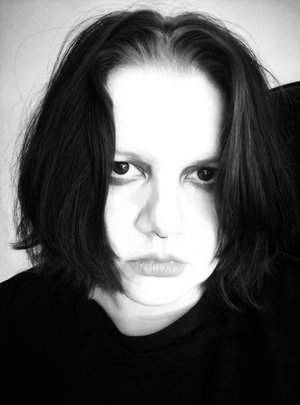
Reclaiming My Voice: A Letter to Myself #MyReclamation
Creative Zoe K M Foster, has a community art project called RECLAIM // Invisible Bodies for disabled, chronically ill, neurodiverse, and medically traumatised individuals who fall into the cracks and are systemically gaslit and overlooked, to reclaim their voice. As part of this project, Foster is inviting people to write letters to themselves to reclaim their voice with love, acceptance, and acknowledgement of the pain we all go through.
My Reclamation Letter
Dear Kaye,
Well, we made it; we lived longer than Vincent van Gogh. Quite a surprise to us all, when we didn’t think we would see 21. Like van Gogh, life has been a struggle and a general feeling of not achieving enough. You see, I was the “gifted” child in school. I was expected to get perfect grades, pick up any instrument, be good at sports, and draw anything. But I was expected to do all of this without any acknowledgment of my disabilities, because no one would bother to assess me. As long as I kept doing as I was told, no one cared how much pain writing caused me. No one cared how confusing spelling and handwriting lessons were. No one cared that I stayed up until 3 or 4 am each day trying to finish all my homework because putting my ideas into words was so difficult.
Just keep doing as you’re told.
So I did, and in combination with living under Section 28, I was both lost and hurting.
Not only was I trying to hide my queer identity, but I was trying to hide my difficulties and struggles. I was brought up being told it was not okay to cry. It was not okay to show weakness.
I am here to tell you, Kaye, it was always okay to cry. The things you could not do and the things you struggled to do were not weakness. You were invisible, and it is not your fault that peers, teachers, and parents never saw you.
Like van Gogh, you were expected to do so much that wasn’t good for your well-being, and like van Gogh you tried to comply. You put too much pressure on yourself to keep up with your peers and to do what society expected from you. You tried to learn to drive (and failed), you tried to work a 9-to-5 (and failed), you tried to perform an assigned gender (and failed). But what van Gogh and you both needed to hear was it’s okay. These perceived failures were never failures, it was simply indicators that you were not on the correct path for you and the way your body (and mind) functioned. The endless push cannot last forever, and for us both, it didn’t. We broke.
I was in and out of mental health services for over a decade before the NHS allowed me to speak to a psychologist. As soon as I did, within a few appointments, he said I was likely Autistic and made a referral for diagnosis. Shortly after that diagnosis, I was also diagnosed with Dyslexia, Dyscalculia, Dysgraphia and Phonological Processing Disorder.
All those decades of struggle suddenly made sense, and I realised I could not continue to push myself into a box to be deemed acceptable by society; otherwise, I was going to end up in another kind of box, my coffin.
I also went through a grieving period, not because of my diagnoses, but because of all the decades I had lived my life without any support or answers as to why I found things so difficult. I denied the diagnosis for a bit by thinking maybe I was an imposter?! I was angry with the teachers and my parents for never seeing who I was. I bargained with myself that “if you can just do this one thing everyone else can do, then maybe all the wasted years will not be so painful” (while breaking my body trying to do what others can do). I felt depressed by the fact that all that time had been wasted, and I would never be able to “fix” my difficulties because they were caused by genetic neurological differences (it would mean being in an entirely different body); and finally, many, many, many years later, I reached acceptance.
I stopped masking myself.
I worked on trying to give myself the love and acceptance I never had as a child.
And I began to stand up for myself and my rights when dealing with the systemic ableism in our societies.
Standing up for myself has caused me to lose “friends”, be excluded from socialising groups, and have people try to discredit my diagnoses whilst trying to infantilise me at the same time. It has cost me hours and hours of my life writing complaint letters, with them often being ignored because I cannot write very well or my disability discrimination complaints are treated as “nothing worth complaining about”.
I will keep on fighting; I don’t care how many people I lose along the way, because those people are not my allies if they think it’s okay to uphold ableist and non-disabled-normative ways of being. Disabled people need radical acceptance, and until we receive that radical acceptance, I will fight with radical anger and passion until every single one of our voices is heard.
No more politeness until they give us equality.
Never give up the battle, warrior!
Kaye
Join the Reclamation
To take part in this collective reclamation with Foster, click the button below, “…and turn the tide of rage and grief into something deeply and powerfully nourishing, supportive, and revolutionary for our social systems.”*
*- Zoe K M Foster